
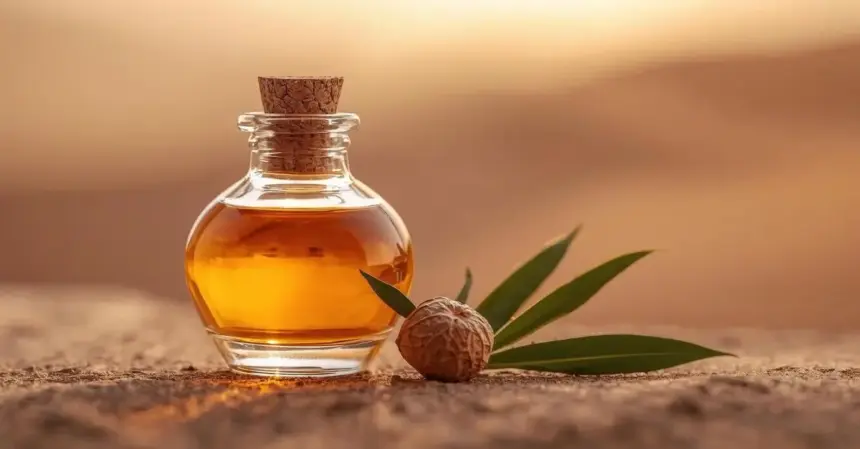
Deep in the semi-arid regions of Southwestern Morocco lies an ancient secret that has revolutionized the modern beauty industry: Argan Oil. Often referred to as “Liquid Gold,” this extraordinary oil is extracted from the kernels of the Argan tree (Argania spinosa), a species that dates back millions of years. This tree is so vital to the planet’s biodiversity that its forest was declared a UNESCO Biosphere Reserve. The resilience of this tree, which can survive extreme heat and drought, is bottled within its oil, offering unparalleled regenerative properties for human skin and hair.
The production of high-quality Argan oil is an art form preserved by Berber women’s cooperatives. To this day, the most prestigious oils are those produced through traditional methods. The process involves drying the fruit, removing the pulp, and then hand-cracking the hard inner nut between two stones. It is a labor-intensive task that requires incredible precision. This hand-pressed method ensures that the oil’s molecular structure remains intact, providing a concentration of nutrients that industrial cold-pressing often fails to preserve entirely.
What makes Argan oil the crown jewel of cosmetics is its scarcity and the sheer volume of work required. It takes nearly 20 hours of manual labor to produce one liter of oil. This exclusivity, combined with its proven clinical benefits, has made it a staple in luxury spas and high-end skincare formulations. Unlike synthetic alternatives, Argan oil is a living product, vibrating with bio-active compounds that communicate directly with our skin cells to repair damage and restore vitality.
The Science of Radiance and Repair
From a dermatological perspective, Argan oil is a powerhouse of Essential Fatty Acids (EFAs) and antioxidants. It is particularly famous for its high content of Gamma-tocopherol, a form of Vitamin E that is exceptionally effective at neutralizing oxidative stress. This makes it an essential tool for anyone living in urban environments where pollution and UV radiation constantly attack the skin’s barrier.
Key Nutrients for a Youthful Glow
-
Oleic and Linoleic Acids: These provide deep hydration and help maintain the skin’s permeability, ensuring moisture stays locked in.
-
Squalene: A natural component of our sebum that decreases as we age. Argan oil replenishes this, keeping the skin supple.
-
Polyphenols: These offer anti-inflammatory and antiseptic benefits, making the oil suitable for sensitive or irritated skin.
-
Ferulic Acid: A potent antioxidant that helps prevent sun damage and dark spots.
One of the most remarkable features of Argan oil is its absorption rate. Despite being an oil, it is non-greasy and “dry” to the touch. It mimics the skin’s natural lipid mantle, allowing it to penetrate the epidermis quickly. This delivery system ensures that the omega-6 fatty acids reach the deeper layers of the skin, where they can effectively stimulate collagen production and improve overall skin texture and elasticity.
Transforming Hair Health and Texture
In the world of professional hair care, Moroccan Argan oil is synonymous with luxury. It is one of the few oils capable of penetrating the hair shaft rather than just sitting on top of it. This allows it to nourish the hair from the inside out, making it an ideal treatment for hair that has been damaged by heat styling or chemical processing. Regular use results in a significant reduction in hair breakage and a visible increase in shine and manageability.
For those struggling with scalp issues, Argan oil provides a soothing, natural solution. Its anti-inflammatory properties help reduce redness and itching associated with dandruff or psoriasis. By balancing the scalp’s oil production, it creates the perfect environment for healthy hair growth. Whether used as a pre-shampoo mask or a finishing serum, it provides a silky finish without the weight of silicones, making it a favorite for all hair types, from fine to coily.
Ethical Sourcing and Social Impact
Beyond the bottle, Argan oil represents a powerful movement for women’s empowerment. The cooperatives in Morocco have provided thousands of women with financial independence and access to education. By choosing certified organic and fair-trade Argan oil, consumers are directly contributing to the socio-economic development of rural Berber communities. This ethical dimension adds a layer of “feel-good” luxury to the product, knowing that your beauty routine supports a sustainable global cycle.
Environmental conservation is also at the heart of the Argan industry. The trees act as a natural barrier against the Sahara Desert’s expansion. Because the oil has such high economic value, the local population is incentivized to protect and replant these forests. This creates a sustainable ecosystem where the preservation of nature is directly linked to the prosperity of the people. It is a rare example of a commercial success story that actually helps heal the planet.
How to Spot Genuine Liquid Gold
The market is unfortunately flooded with diluted or “refined” Argan oils. To ensure you are getting the real “Liquid Gold,” look for a pale golden hue. If the oil is too clear, it has been over-processed; if it is too dark, it is likely the culinary version (made from roasted seeds), which is less effective for skincare. The scent should be subtly nutty and should disappear shortly after application.
Always check the label for 100% pure Argania Spinosa kernel oil. Authentic oil should be stored in dark glass bottles to prevent light-induced oxidation. Plastic packaging can leach chemicals into the oil over time, so glass is always the hallmark of a premium brand. When you find a high-quality, cold-pressed, and unrefined oil, you are holding one of nature’s most potent anti-aging secrets.
FAQ: Everything You Need to Know
Is Argan oil good for acne-prone skin?
Yes. It has a comedogenic rating of zero, meaning it will not clog your pores. While it may seem counterintuitive to apply oil to acne-prone skin, Argan oil is unique because of its high linoleic acid content. This specific fatty acid helps regulate and thin out your skin’s natural sebum, preventing the thick oil buildup that typically leads to breakouts. In fact, clinical studies observed in 2026 show that a twice-daily application can significantly reduce skin oiliness within four weeks.
Can I use it during the day?
Certainly. Its rich antioxidant profile, particularly Vitamin E and polyphenols, acts as a biological shield against environmental stressors like pollution and incidental UV exposure. However, because it is an oil, it should be applied before your sunscreen. In 2026, dermatologists recommend waiting a few minutes for the oil to absorb fully to ensure your sunscreen’s protective film remains stable and effective.
Does it expire?
Pure, cold-pressed Argan oil generally remains potent for 18 to 24 months if stored in a cool, dark place. Once opened, its shelf life is typically reduced to about 6 to 12 months due to oxygen exposure. You can tell it has gone “rancid” if its natural, faintly nutty aroma turns sour or if the texture becomes noticeably cloudy or thick. Using expired oil is not recommended as the degraded compounds can cause skin irritation rather than healing.
How can I tell if my Argan oil is authentic?
Real cosmetic Argan oil should have a pale golden-yellow color and a very light, disappearing nutty scent. If it smells like nothing at all, it may have been over-processed or deodorized, stripping it of nutrients. If it smells strongly of toasted nuts, it is likely the culinary version, which is delicious but less effective for skincare. Always look for certifications like Ecocert or IGP (Indication Géographique Protégée) to ensure it was sustainably sourced from the argan forests of Morocco.