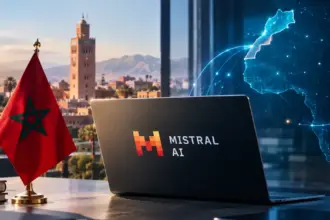



Morocco is rapidly becoming a major digital hub in Africa. With the rise of the “Digital Morocco 2030” vision, companies across Casablanca, Tangier, and Marrakech are migrating their operations to the cloud. However, this digital leap has attracted global cybercriminals. Today, cybersecurity is no longer a luxury for Moroccan firms—it is a core business requirement. Organizations are shifting their focus from simple antivirus protection to comprehensive cyber resilience strategies to protect their assets from sophisticated threats.
The Moroccan government has been proactive in creating a safe digital environment. The National Cybersecurity Center (DGSSI) provides a framework that helps both public and private sectors align with international standards. For local businesses, this means adopting proactive defense mechanisms. Leaders now understand that a single data breach can result in massive financial loss and, more importantly, a devastating blow to their reputation. Building trust in the digital age is now the primary driver for technological investment in the Kingdom.
Common Threats Facing the Moroccan Market
Ransomware attacks have surged in Morocco over the past few years. These attacks involve hackers locking a company’s data and demanding payment in Bitcoin to release it. From manufacturing plants to logistics firms, no sector is immune. The reality is that many small businesses are one attack away from permanent closure. Attackers often exploit unpatched software or use Phishing emails to gain their first foothold in a corporate network.
Another rising concern is Identity Theft and credential stuffing. Hackers use automated tools to try millions of leaked passwords on corporate portals. Because many employees reuse passwords across different sites, this is an easy win for criminals. Furthermore, Moroccan companies are increasingly targeted by social engineering schemes where attackers impersonate vendors or executives to authorize fraudulent wire transfers. This “human hacking” is often harder to detect than technical malware.
Core Strategies for Modern Cyber Protection
To stay ahead, Moroccan enterprises are implementing Multi-Layered Security. This starts with protecting the “human firewall” through continuous education. Technically, the adoption of Endpoint Detection and Response (EDR) has become standard. Unlike traditional antivirus, EDR uses behavioral analysis to spot anomalies. If a computer starts behaving like a hacker’s tool, the system automatically isolates it, preventing a full-scale catastrophe within the organization’s infrastructure.
Data encryption is another critical layer. Whether it’s customer information or financial records, data must be encrypted at rest and in transit. This ensures that even if a database is stolen, the information remains unreadable to the thieves. Moroccan firms are also moving toward Cloud Security solutions that offer built-in protections, such as automatic backups and DDoS mitigation, which are often too expensive to maintain on-premises for smaller companies.
Essential Security Checklist for Moroccan Companies
Building a secure environment requires a disciplined approach. Experts suggest focusing on these key areas to build a robust defense:
-
Multi-Factor Authentication (MFA): Adding a second layer of verification for all employee accounts.
-
Incident Response Plan: A clear “playbook” on what to do when a breach is detected.
-
Regular Vulnerability Scans: Proactively searching for “holes” in the network before hackers do.
-
Segmented Networks: Keeping guest Wi-Fi and sensitive business data on completely separate networks.
-
Air-Gapped Backups: Keeping critical data backups disconnected from the internet to prevent ransomware encryption.
The Human Element: Training and Awareness
Technology alone cannot solve the cybersecurity puzzle. In Morocco, the most successful companies invest heavily in Cyber Awareness Programs. Employees are taught how to spot suspicious links, how to verify strange requests from “management,” and the importance of physical security (like not leaving laptops in cars). By fostering a security-first culture, companies empower every staff member to act as a defender. This cultural shift is proving to be more effective than any single software purchase.
The Future of Cybersecurity in the Kingdom
Looking forward, the integration of Artificial Intelligence (AI) in cyber defense will be game-changing. AI can analyze millions of events per second to find the “needle in the haystack”—the tiny sign of a sophisticated intrusion. Morocco is also seeing a growth in local cybersecurity firms that provide 24/7 monitoring services. As the country continues its digital journey, cybersecurity will be the foundation upon which the future economy is built, ensuring that Moroccan innovation remains safe from global threats.