



It provides access to recent AI Mode searches. At the same time, many logged-in users have seen the historical “Google Search” button give way to Gemini shortcuts: image generation (Nano Banana), file analysis, and “Brainstorm.” “I’m Feeling Lucky” remains. Classic search still works by pressing Enter. This is not a sudden disappearance of the engine, but a visible signal. After twenty-eight years of domination by the ten blue links, Google is explicitly placing its artificial intelligence tools at the forefront of the web’s most iconic experience.
This interface change symbolizes a broader strategy. Alphabet is no longer content to defend its search engine. The company is willing to disrupt its historical economic model to control the artificial intelligence value chain: infrastructure, chips, models, agents, and distribution.
The third-quarter 2026 financial results illustrate the paradox. Consolidated revenue reaches $127.6 billion (+25% year-over-year), Google Cloud nearly doubles to $30.7 billion (+103%), but capital expenditures amount to $51.4 billion and free cash flow turns negative to around -$9.1 billion. The 2026 guidance is between 195 and 205 billion dollars in capex. Google still generates considerable revenue through Search, but is preparing an economy in which AI agents and computing become the new levers of dominance.
The gradual end of Google’s ten blue links
Google.com long embodied radical simplicity: a logo, a search bar, two buttons. Launched in 1998, the engine conquered the web by returning lists of links ranked by relevance. This “ten blue links” model has structured entire industries—natural referencing, advertising, online publishing, content creation.
AI-generated answers weaken this logic. AI Overviews and AI Mode provide syntheses directly on the results page or in a conversation. Several independent studies, including randomized experiments conducted in 2026, show significant drops in clicks to external websites when these features appear (around 40% in some protocols for AI Overviews, and reductions of the order of 18-19 percentage points in tests on AI Mode).
“Zero-click” search rates are increasing. Publishers, media, and content creators see their organic traffic contract, particularly on informational queries.
Internet user behaviors are evolving. Questions are no longer always “one and done.” Users return to conversation threads, chain tasks, and expect actions rather than links. Autonomous AI agents accentuate this trend: they can query sources, execute tasks, and deliver a result without passing through a classic results page. This reduces Google’s role as the exclusive gateway to the web, while reinforcing its ability to stay in the loop via its own agents and tools.
For SEO and publishers, the consequences are direct. Being cited in an AI response becomes as important as occupying the first organic position. Sites that do not provide structured data, clear authority, or content that is difficult to synthesize lose visibility. Google affirms that the global volume of clicks remains relatively stable and that the quality of certain clicks improves, but sectoral data often contradicts this reading on the most exposed segments.
Alphabet, financial giant facing a model shift
In the third quarter of 2026, Alphabet published revenue of 127.6 billion dollars. Google Services (Search, YouTube, Network, subscriptions) progresses by about 11% to 96.3 billion. Search & other reaches 63.4 billion (+12%), slowing down compared to +17% the previous quarter. Google Cloud jumps 103% to 30.7 billion, with an operating margin around 36% and a backlog of several hundred billions.
Consolidated operating income progresses by about 30% to 40.6 billion. Free cash flow, on the other hand, becomes negative (-9.1 billion approximately), mainly due to capex of 51.4 billion and one-off items (including a fine from the European Commission and inventory accumulation related to TPUs).
The markets reacted strongly. Alphabet stock dropped by about 11 to 13% after the publication, erasing several hundred billions of capitalization. Investors pointed to the slowdown of Search, the still limited monetization of AI Mode queries, and the scale of investments. This reaction translates neither a financial bankruptcy nor a technological decline. The company continues to generate considerable operational cash flows (42.3 billion in the quarter) and holds an important position in cash and marketable securities.
It simply chooses to reinvest massively rather than maximize short-term free cash flow. Confusing a stock drop linked to future capitalization with structural weakness would be an analysis error.
The 200 billion dollar industrial gamble
Artificial intelligence transforms software giants into infrastructure industrialists. Alphabet guides between 195 and 205 billion dollars of capital expenditures for 2026, and indicates that the amount will increase significantly in 2027. A significant share goes to servers and network equipment (about 65% in the quarter), the rest to data centers. These investments cover energy, cooling, networks, and above all the computing capacity necessary for training and inference of Gemini models.
Google has been developing its own Tensor Processing Units (TPUs) since 2013. These specialized chips give it a cost and performance leverage that its purely software competitors do not have. The company is no longer content to use them internally: it sells TPU systems to customers who install them in their own data centers and makes them available via partners. Inventory linked to these systems has strongly increased. This industrialization is the price of access to the next economy. Without control of computing capacity, a high-performing model remains dependent on third-party suppliers and their margins.
Gemini and the pricing offensive
Google launched Gemini 4 Neon on November 18, 2026. According to Google’s official announcement, the model is priced at 3 dollars per million tokens in input and 15 dollars in output, with a cache at 0.15 dollar (95% reduction), a context window of one million tokens and multimodal capabilities (text, images, audio, video, PDF). It targets complex software development, knowledge work, and science workflows, with multiple levels of “thinking.” Google positions it as offering a good performance/cost ratio per task compared to its heavier models in certain configurations.
This pricing is part of a dynamic of falling computing prices. Models are gradually becoming commoditized: several actors propose large context windows, high performances on benchmarks and falling prices. Google has a potential structural advantage thanks to its TPUs and its integrated infrastructure, which can reduce the marginal cost of inference compared to actors dependent on third-party chips.
No isolated benchmark proves a definitive superiority; results vary according to tasks, harnesses (execution environments) and reasoning levels. What is important for companies is the combination of cost, latency, reliability, and integration.
The Google Cloud paradox: monetizing rivals
Google Cloud monetizes its infrastructures and its TPUs with actors who develop competing models. Anthropic has engaged very significant computing commitments with Google (more than 120 billion dollars mentioned in public documents for a period extending until 2033, according to filings analyses). Apple uses TPUs for foundation model training and has extended certain cloud workloads. Meta and Oracle are among the mentioned partners or clients. Google Cloud claims nearly a hundred TPU clients.
The paradox is assumed: Alphabet can generate revenue even when its clients use Claude, internal models, or other systems. TPU system sales and capacity leasing turn part of the competition into a revenue source. This diversifies flows beyond Search and reinforces the ecosystem around Google chips, even if it also feeds rivals.

Google’s limitations: when the model is not enough
A model’s quality does not guarantee a product’s success. Google Antigravity, the development and agentic programming environment, illustrates these frictions. Developers report quota issues (weekly or five-hour window limits, not published in absolute figures), unexpected capacity drains, restricted access to certain models depending on subscriptions, and reliability difficulties in complex agentic loops.
Competing tools (environments based on Claude or others) capture a part of developers’ attention thanks to experiences sometimes perceived as more stable or transparent on limits.
These user experience, quota, and trust issues remind that distribution, integration into existing workflows, and predictability count as much as benchmark scores. Google still has to prove that it can convert Gemini’s power into tools that professionals adopt durably.
Spirit Airlines and the quest for business data
In November 2026, an American bankruptcy judge approved the acquisition by Google, for about 10 million dollars, of an enterprise dataset resulting from the liquidation of Spirit Airlines. These are emails, Teams messages, files, operational data (flights, crews, maintenance, etc.), after a de-identification process conducted by a third party. Google indicated that this data could help improve its AI products and models, and that no personally identifiable information would be received.
The interest lies in the nature of the data: these are not simple web pages or public corpora, but traces of decisions, coordination, problem solving, and real business processes. Raw, structured or truly “business” data does not have the same value to train agents capable of acting in enterprise contexts. Confidentiality, anonymization, governance, and usage rights issues remain central. The operation shows that actors seek professional data sources beyond open web scraping.
What this changes for businesses in 2027
Three concrete directions emerge.
First, avoid dependence on a single supplier. Build architectures that allow switching models (Gemini, Claude, open-weight models or others) according to tasks, costs, and data constraints. Price drops and commoditization make this flexibility more accessible.
Then, take advantage of falling computing costs to further automate and improve margins. Agents can take charge of repetitive processes, provided they are framed by verification systems adapted to the activity.
Finally, constitute one’s own business data and result control mechanisms. Value will not reside solely in the used model, but in the capacity to feed it with proprietary data, validate outputs, and integrate it into real processes. Companies that master their data and workflows will keep an advantage even if base models become commoditized.
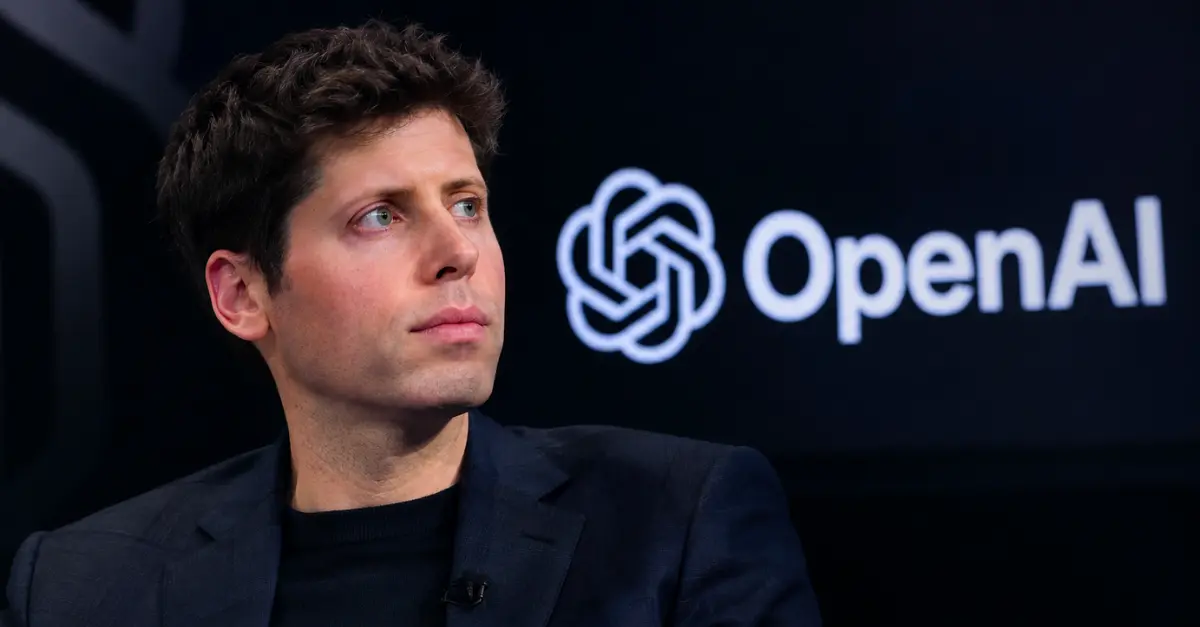
Google vs. OpenAI and Anthropic
Competition bears on several simultaneous fronts: mastery of infrastructures and chips, distribution power (Search, Android, Chrome, Workspace), intelligence cost, quality of autonomous agents, data access, and developer loyalty. OpenAI and Anthropic excel on certain models and ecosystems. Google disposes of a massive installed base and vertical integration (chips, cloud, distribution, data).
The homepage change is only a symbol. Behind, Google accepts to partially cannibalize its blue links model to remain central in an economy where agents and computing prime. The central question remains open: is it about saving the historical empire by transforming it, or building an entirely different company, where Search is no longer the core but a channel among others?
Massive investments and infrastructure monetization with rivals indicate that Google bets on the second option, while using the first as a transition lever.