
I read a signal. The OpenAI safety resignation of David Robinson is one. He had been leading transparency work within the safety team at the maker of ChatGPT. In an essay published by The Atlantic, he warns that the major AI companies are not doing enough to mitigate the risks of this technology. He calls for a level of rigor comparable to that of the nuclear industry.
Key takeaways
- David Robinson, OpenAI’s former transparency lead, has left the company.
- In The Atlantic, he says the company’s vigilance is insufficient given its rapid launches.
- He wants AI companies run like nuclear power plants, with multiple layers of redundancy.
- He joins a growing number of industry employees sounding the alarm.
One more departure, but a different message
Robinson is not writing an indictment of his former colleagues, and that is what makes his piece interesting. “My former colleagues are brilliant, hardworking, and trying to make the right choices,” he writes. His criticism is about pace. In its headlong rush from one launch to the next, he argues, the company fails to reach the level of vigilance he considers necessary.
He describes a culture that has thrived on experimentation: try, observe, correct. That method has long made sense in consumer software. Robinson stresses that its inevitable consequences grow as the technology’s capabilities advance. In the version I have, he illustrates the point with a specific example involving OpenAI. The passage is truncated in my source text, so I do not reproduce it.
Why the nuclear analogy changes the debate
The heart of the essay is a comparison. Robinson believes AI companies should be run like nuclear power plants, “with multiple layers of redundancy and rigorous, painstaking planning,” so that human errors, “as rare as they are inevitable,” do not lead to catastrophe.
That image deserves a closer look. In a power plant, nobody assumes the operator is perfect. The system is built on the assumption that someone will eventually make a mistake, and barriers are stacked up so that the mistake has no consequences. It is the opposite of the fast-launch mindset, where you ship first and fix later.
Robinson therefore asks for “something much closer to perfection from the start.” He acknowledges a major difficulty: today, AI companies do not know how to do this. According to him, other people do. Here again the end of the sentence is truncated in my material, and I would rather not complete it on his behalf.
What I take from it, as an observer of the sector, is less the comparison itself than what it implies. Talking about safety culture, redundancy and planning shifts the question from individual goodwill to the architecture of organizations.
A broader movement in the industry
Robinson is not alone. According to my source text, his departure adds to a growing number of employees in the sector who are sounding the alarm. Some go as far as saying this technology could one day wipe out humanity, a view that remains highly debated among researchers.
The most frequently cited precedent dates back to May 2024. Jan Leike, then co-lead of OpenAI’s “superalignment” team, left the company, criticizing it for letting safety culture take a back seat to more eye-catching products. OpenAI then folded that team into its other research efforts rather than keeping it as a standalone unit, after the departure of its two leaders, including co-founder Ilya Sutskever. More recently, in March 2026, OpenAI’s head of robotics, Caitlin Kalinowski, resigned after a deal with the Pentagon, citing governance and the need to clearly define guardrails.
The motives differ from case to case. The underlying question keeps coming back: how far can the companies building these models regulate themselves?
What other players are saying
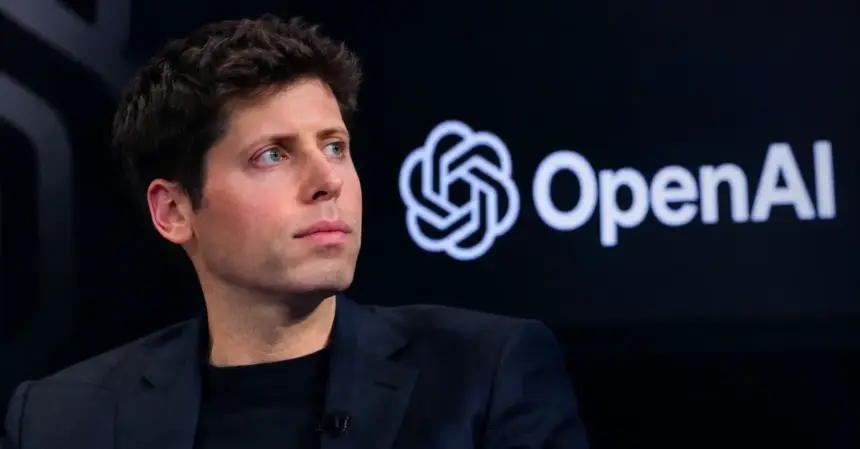
The industry does not speak with one voice. According to the material I have, Dario Amodei, CEO of Anthropic, has called for slowing the development of the most advanced models. He also announced that his company would use external evaluators to review and secure the technology. Other executives, including Sam Altman at OpenAI, have spoken publicly on the subject, but the relevant passage is truncated in my text, and I cannot report its content.
Nuance matters here. The companies concerned generally argue that they invest in safety and that gradual deployment is precisely how one learns. Critics respond that learning by doing becomes riskier as the technology grows more powerful. Both arguments have their logic, which is exactly why the debate is so hard to settle.
What is at stake in the coming months
I see three issues to watch.
- OpenAI’s response. Has the company commented on Robinson’s essay? I have no evidence either way, and this needs to be checked before publication.
- The role of external evaluators. Anthropic’s announcement will be judged on its results: who evaluates, with what access, and how independently?
- Regulatory pressure. If employees themselves call for industrial-grade standards, the case for binding rules is likely to carry more weight with policymakers.
An open conclusion
I would avoid drawing a definitive conclusion from this departure. A single account, however qualified, does not tell the whole story of what happens inside a company. Still, the resignation of a transparency lead within a safety team raises a simple question. Can increasingly powerful systems be operated with the methods of a start-up that iterates quickly? Robinson answers no. The other players have yet to show they have a different answer.
FAQ
Who is David Robinson?
He previously led transparency work within OpenAI’s safety team. He has left the company and published an essay in The Atlantic.
What does he criticize OpenAI for?
He believes that, in its rush from one launch to the next, the company does not reach the level of vigilance required. He does, however, praise the work and intentions of his former colleagues.
What do “nuclear-level safeguards” mean?
Robinson proposes running AI companies like nuclear power plants, with multiple layers of redundancy and rigorous planning, so that human errors do not end in catastrophe.
Where does Anthropic stand?
According to my source text, its CEO Dario Amodei has called for slowing the development of the most advanced models and announced the use of external evaluators.